
~1600
Meridiana · Forno · Torretta
The hamlet bastion
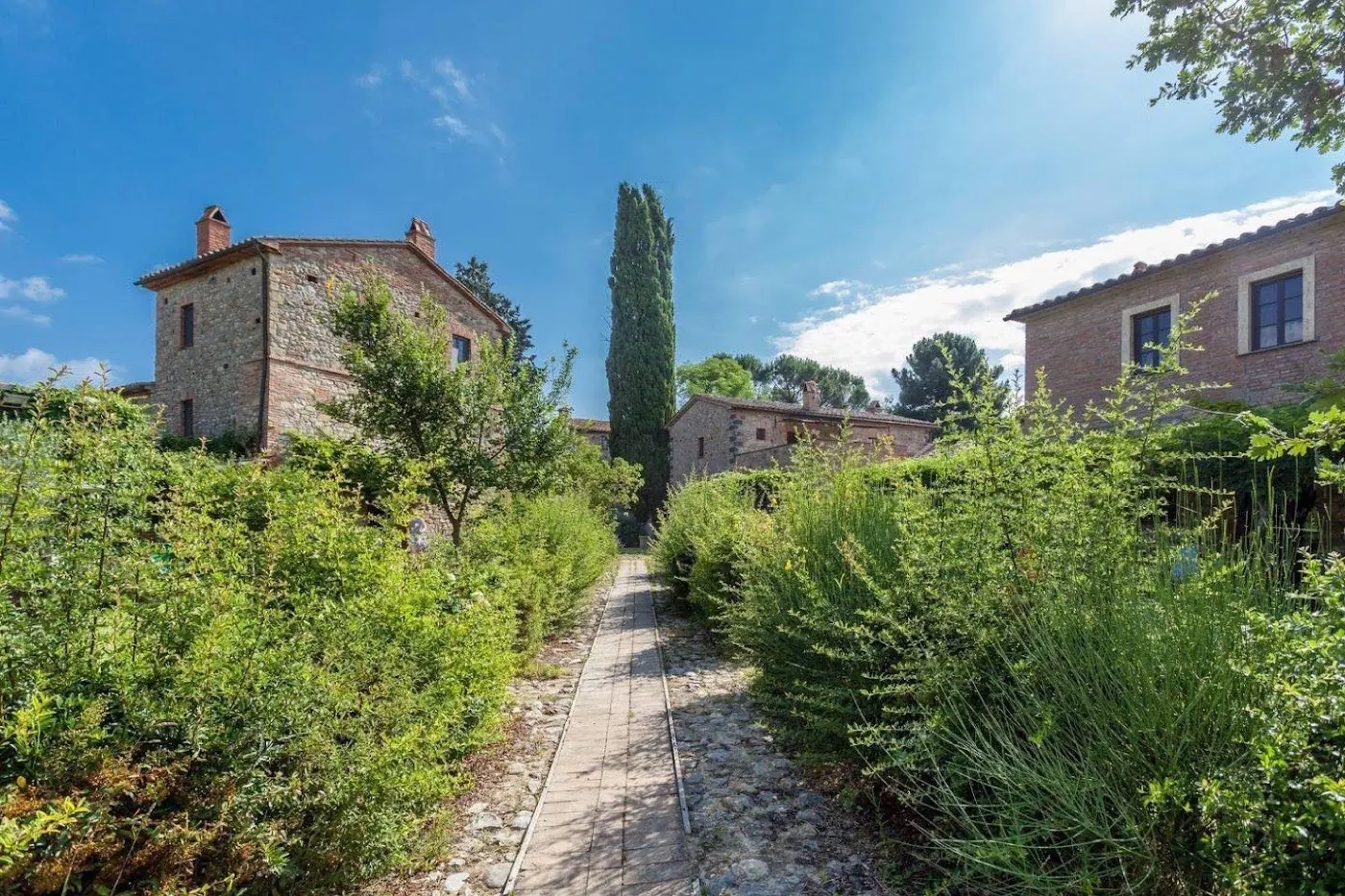
The oldest building. Along the passable road, probably born as an inn for travellers.
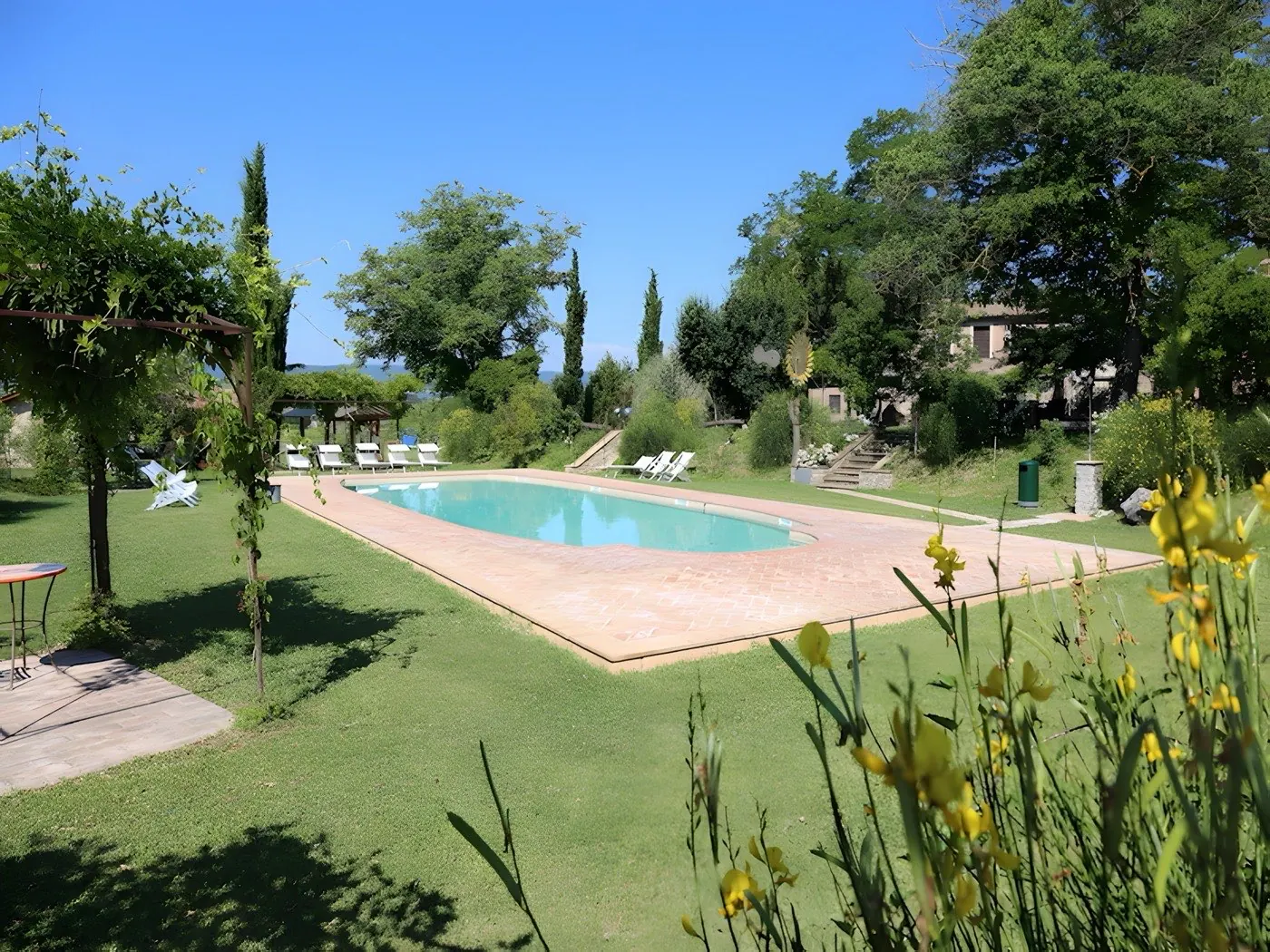
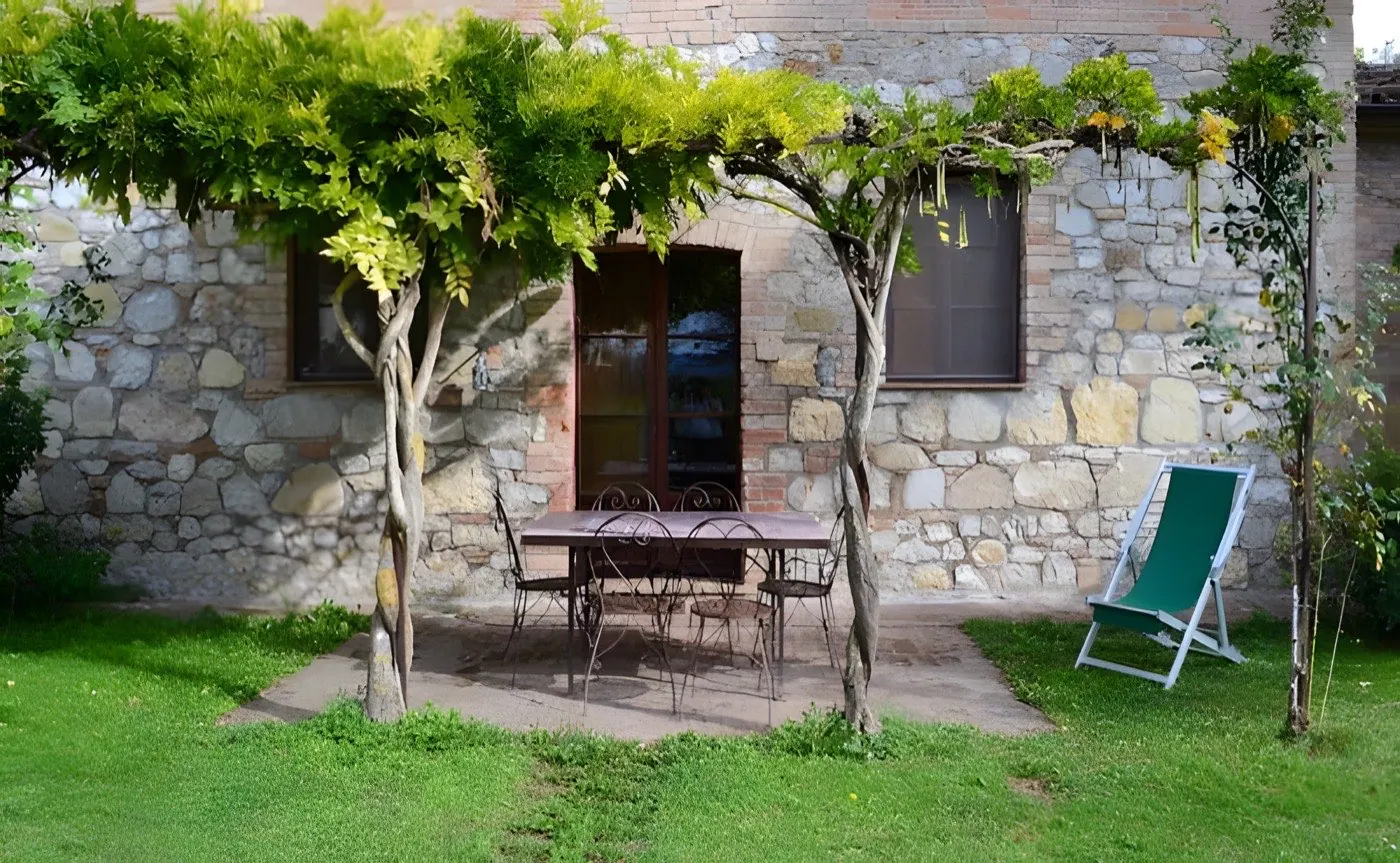
Two thousand years of history around the Chiani river, flowing 800 metres from our stone houses. A valley that has been Rome\'s granary, a cursed marsh, Leonardo da Vinci\'s dream, and finally fertile countryside to live in.
Borgo Santa Maria stands in the municipality of Monteleone d'Orvieto, in Umbria on the Tuscan border. The oldest building — the bastion that today hosts Meridiana, Forno and Torretta — dates back to the 17th century, along one of the rare passable routes crossing the ancient Val di Chiana marsh. The property has belonged to our family since 1968 and in 1998-2000 it was restored and turned into an agriturismo, preserving as many original elements as possible.
The story of a valley and a small hamlet along the Chiani river — called Clanis by the Romans — that has known emperors, popes, Renaissance genius and farmers who shaped the fields you see today.
The valley is one of the granaries of the Empire. Nero builds the Mur Grosso bridge (7 km away) to regulate the waters of the Clanis — today's Chiani river, which flows 800 metres from the hamlet.
The Republic of Florence commissions Leonardo da Vinci to drain the Val di Chiana marsh. His bird's-eye drawing — today kept in the Royal Library at Windsor Castle — is one of the first modern cartographies. The work will never be carried out.
Pope Julius III orders the first major levelling of the valley from Arezzo to the Mur Grosso bridge. The long history of land reclamation begins.
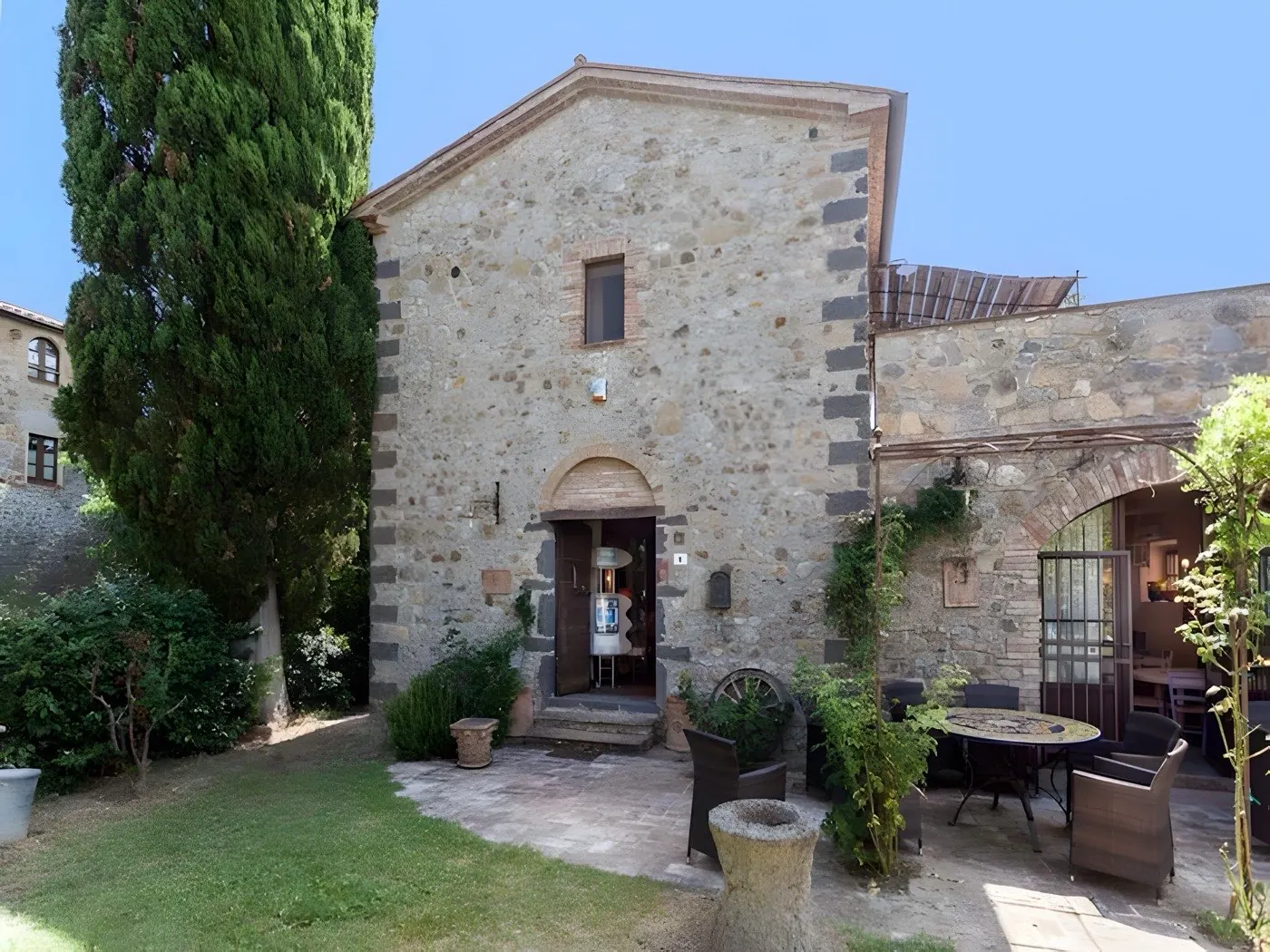
Along one of the rare passable routes crossing the marsh, the hamlet's bastion rises — today home to the Meridiana, Forno and Torretta apartments. Next to it, a small rural church (today the reception) with a single nave and a stone portal.
With Italian Unification, effective embanking begins. Hundreds of labourers finally make the Val di Chiana crossable by roads and by the new Rome–Florence railway.
The rural buildings now used as apartments take shape: the Chianina-breed oxen stable (Volte), the hayloft, the stable for workhorses, the lemon-house for poultry, and the tool sheds that are now Loggia and Terrazza.
The property passes to the family that still runs it today. On the flat fields, soft wheat, durum wheat, corn, sunflowers and alfalfa continue to grow; on the hills, vineyards and olive groves.
In two years the hamlet becomes an agriturismo: every building is restored preserving as many original architectural and historical elements as possible, in tribute to the place's rural roots.
Already in Roman Empire times, more than two thousand years ago, the extraordinary fertility of the Val di Chiana was famous — cultivated to feed Rome with wheat and cereals. In the imperial age Nero had the Mur Grosso bridge built — about 7 km from here, toward Parrano — to regulate the waters of the Clanis, as today\'s Chiani river was then called.
With the fall of the Empire, the valley turned into a marshy and unhealthy area. People retreated to the hills, giving life to the villages that still dot the area today: Città della Pieve, Monteleone, Fabro, Carnaiola, Salci, Palazzone, Piazze, Chiusi.
Above the marsh, only a few rare passable routes remained. Ancient maps show that along one of these stood the original nucleus of Borgo Santa Maria — probably a wayfarers\' inn.
Throughout the Middle Ages and beyond, the marsh remains. The Grand Duchy of Tuscany and the Papal States both try the reclamation, without success.
In 1503 the Republic of Florence assigns the task to an unexpected name: Leonardo da Vinci. The artist — already famous for the Virgin of the Rocks, already at work on the Mona Lisa — designs embankments and reclamation works for the Val di Chiana.
From those studies comes the bird\'s-eye drawing of the valley, today kept in the Royal Library at Windsor Castle: one of the first modern cartographies, in which the marsh, seen from above, looks like a great silvery lake.
The work will never be carried out. Costs too high, political tensions between bordering states. The marsh remains. But Leonardo\'s drawing — he probably passed through these very hills — is today a document that says: someone, back then, had imagined what this valley would become.
In 1550 Pope Julius III orders the first major levelling of the valley, from Arezzo to the Mur Grosso bridge. Only with the Unification of Italy, in 1862, does truly effective embanking begin. Hundreds of labourers dig and build levees higher than the surrounding fields: still today, walking along the Chiani, you can see it.
The houses that today welcome our guests were stables, horse stables, fodder stores, poultry shelters. We restored them trying not to lose what they used to be. When you sleep in Volte, above you are still the brick vaults built for Chianina oxen.
The oldest building. Along the passable road, probably born as an inn for travellers.
Single nave, steps leading up to a stone-arched portal, corners finished with squared stone.
The brick vaults gave solidity and thermal insulation for the farmers who lived above.
Perforated walls to let hay and grain breathe.
On the opposite side of the oxen stable, housing the horses used in the fields.
At the back of the complex, dedicated to hens, geese and rabbits.
Spaces originally used to store the estate's farming equipment.
The round buildings at the entrance, built in the 1950s, held wheat and grain until a few decades ago.
The brick vaults of the stable gave solidity and thermal insulation for the farmers who lived above.
The Volte apartment · today
The property has belonged to our family since 1968. For thirty years it was a country home, land to farm, a place to come back to.
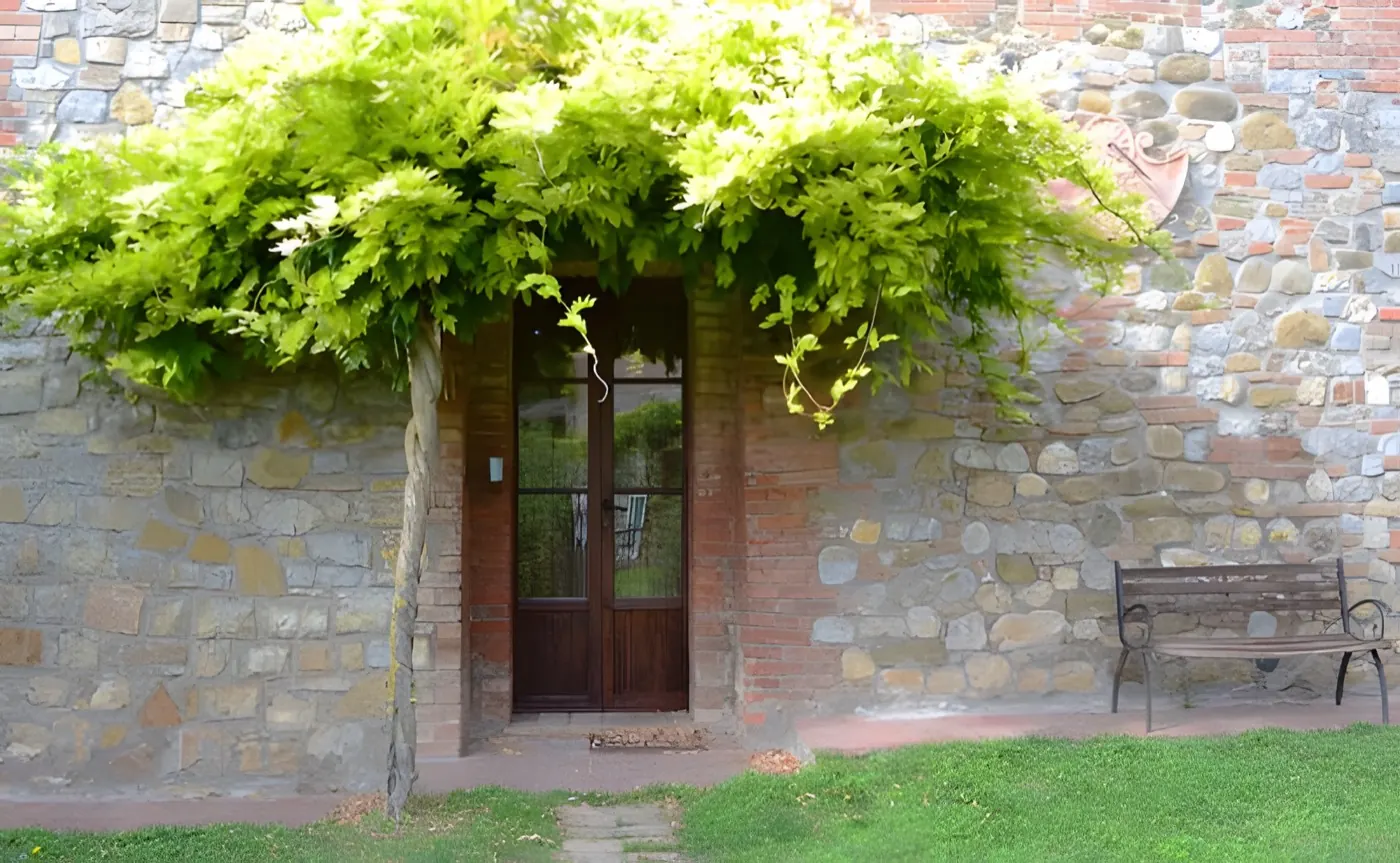
In 1998 we began the restoration that would turn the hamlet into an agriturismo. Two years of work, completed in 2000. The choice was just one, on every detail: preserve as much as possible — the brick vaults of the stable, the terracotta floors, the stone walls, the stone portal of the ancient rural church, the corners finished with squared stone.
The flat fields still produce, in rotation, soft wheat, durum wheat, corn, sunflowers and alfalfa. On the hills are vineyards and olive groves that shape the landscape around the hamlet.
Beneath the three round silos you see at the entrance, built in the 1950s, until a few decades ago we kept the harvest. Today one of them houses the laundry for guests. History is everywhere, but it walks with us.
Every house in the hamlet is a piece of this story. Sleep above the vaults of the Chianina stable, have breakfast in the loggia of the former tool shed, sip your coffee in front of the 17th-century bastion.